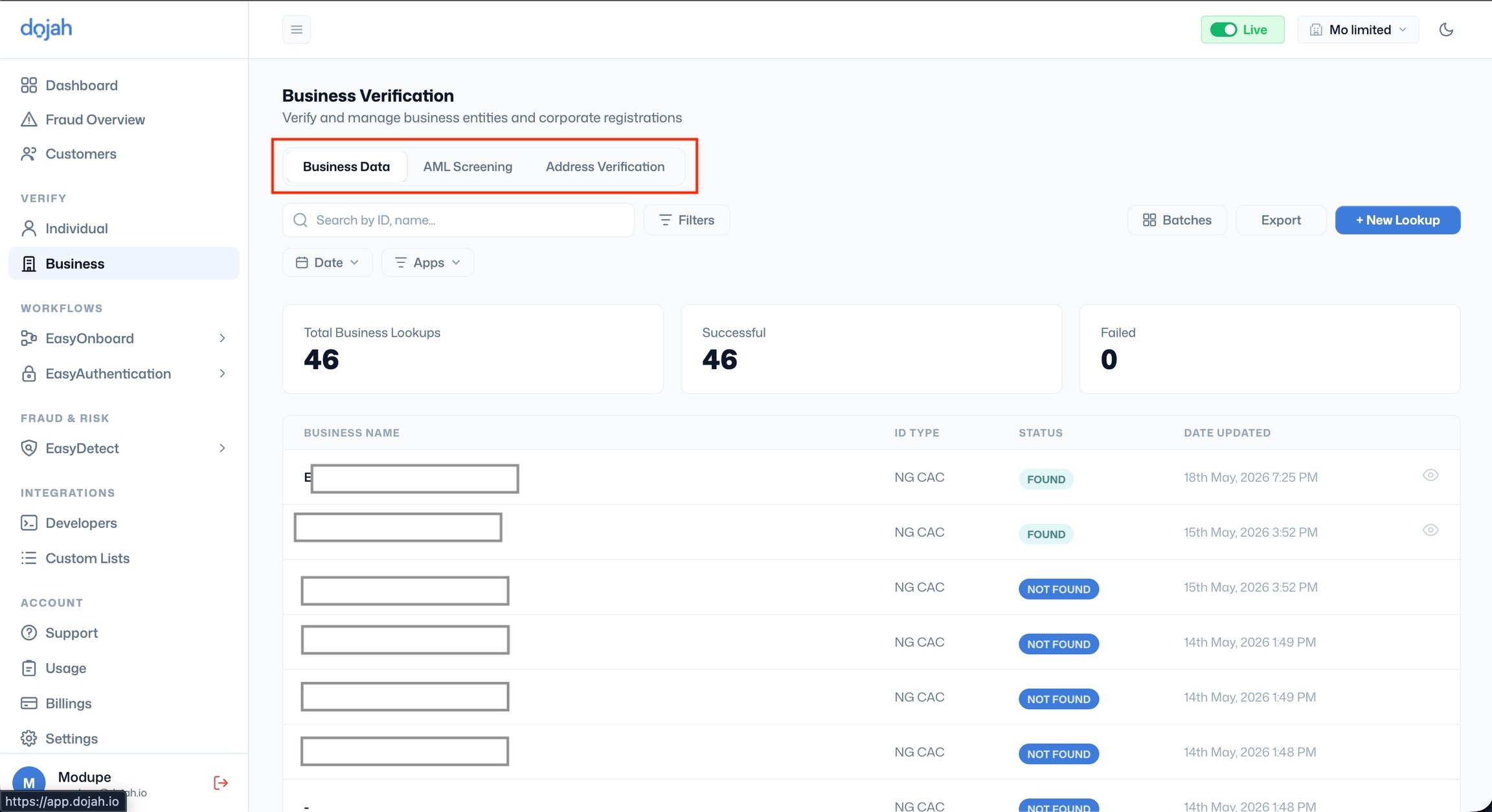
Business Verification types
CAC Basic - Returns the core registration details from the CAC database: company name, registration number, company type, registration date, status, and registered address. This is sufficient for most standard business verification and KYC purposes where you need to confirm a company exists and is in good standing. CAC Advance - Returns everything CAC Basic returns, plus additional deeper registration data from the CAC database. Use CAC Advance when your compliance process requires a more comprehensive view of the company’s records, for example, for high-value merchant onboarding, corporate lending, or enhanced due diligence on significant business relationships. CAC Advance costs slightly more per lookup than CAC Basic. If core registration confirmation is all you need, CAC Basic is the more cost-efficient choice. AML Screening - screens a business entity against international sanctions lists, watchlists, and adverse media databases. This is the business equivalent of individual AML screening and is required for compliance with anti-money laundering regulations when onboarding corporate customers. Address Verification - confirms that a business’s registered or operational address is real and physically exists. A field agent visits the location and returns photographic evidence alongside the verified address data.